
How Long After Plastering Can You Paint?
How long after plastering can you paint? How to tell when new plaster is dry, how to apply a mist coat, and the mistakes that cause peeling paint on new walls.
15 October 2026 · 5 min read
Freshly plastered walls look fantastic, and it's tempting to grab a roller straight away. But painting new plaster too soon is one of the most common reasons for peeling, patchy and cracked paintwork. So how long should you wait after plastering before you paint, and what's the right way to do it? Here's a simple guide.
How long does plaster take to dry?
It depends on how thick the plaster is and the conditions in the room:
- Skim coat (a thin finishing layer): usually a few days to a week in good conditions.
- Full replastering with backing coats: can take up to four weeks or more to dry right through.
- Lime plaster: dries much more slowly than modern gypsum plaster, often taking several weeks per coat, depending on thickness and conditions.
Weather makes a big difference. In Devon's damp autumn and winter months, plaster can take noticeably longer to dry than in summer. Rooms with poor airflow, such as bathrooms and basements, will also be slower.
How to tell when plaster is dry
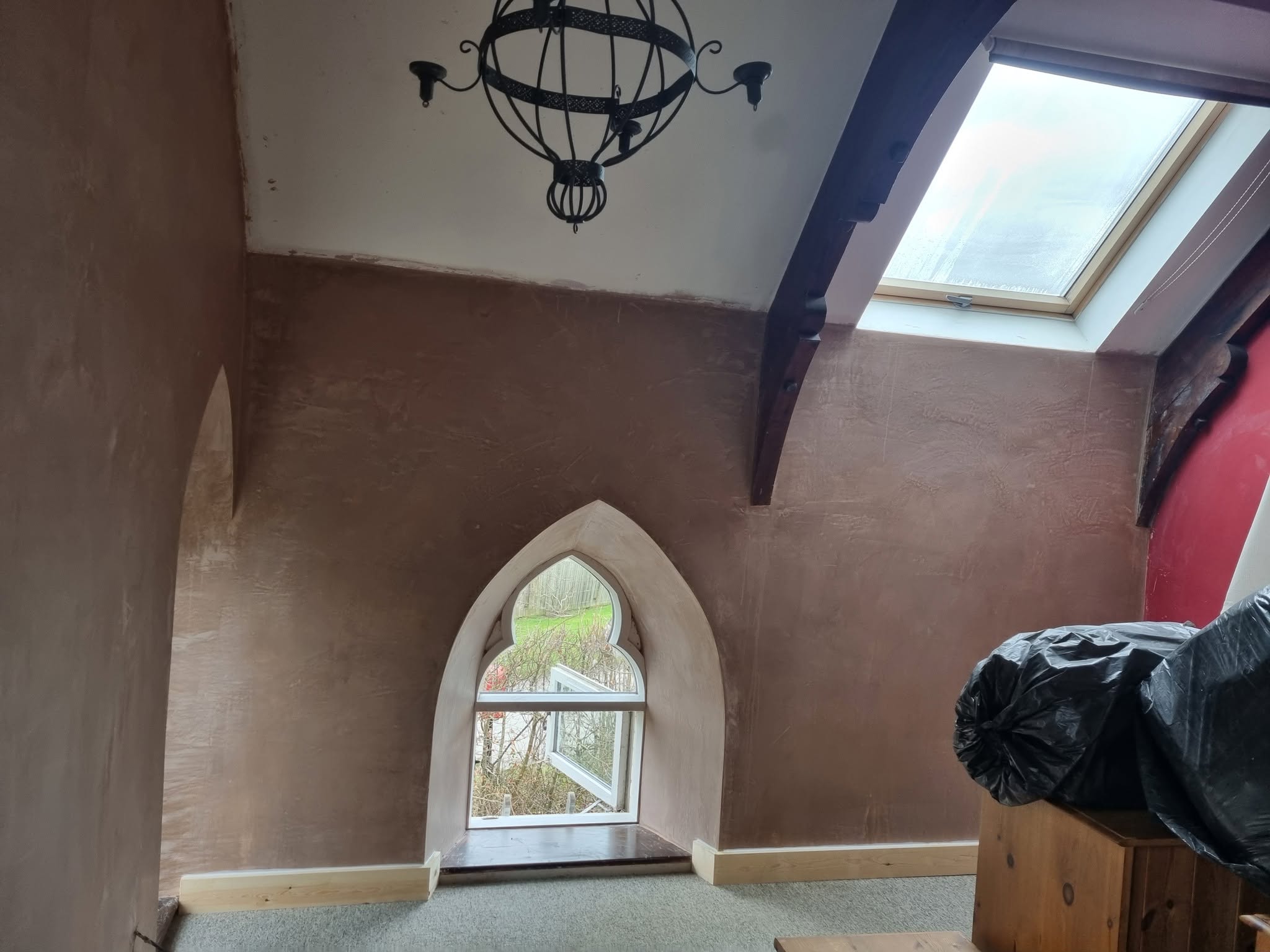
The easiest sign is the colour. Wet gypsum plaster is a dark, brownish pink. As it dries, it turns a pale, even pink all over. If you can still see darker patches, often in corners, around sockets or near the floor, it isn't ready yet. Dry plaster also feels solid and cool rather than damp to the touch.
Helping plaster dry (the right way)
- Keep the room ventilated by opening windows and doors when the weather allows.
- Keep a steady, moderate temperature. Normal heating is fine.
- A dehumidifier can help in damp weather.
- Don't force it. Blasting the room with heaters or aiming a fan heater at the wall can make the plaster dry too quickly and crack.
Why you need a mist coat
New plaster is very porous. If you paint it with normal emulsion, the plaster sucks the moisture out of the paint too quickly. The paint can't bond properly, which leads to peeling and flaking later.
A mist coat solves this. It's simply a watered-down coat of emulsion that soaks into the plaster and seals it, giving your top coats a good surface to grip.
How to mix and apply a mist coat
- Choose the right paint. Use a basic matt emulsion, or a "contract matt" made for new plaster. Avoid vinyl and silk emulsions for the mist coat. They contain more plastics, which can sit on the surface rather than soaking in.
- Dilute it. A common ratio is around three parts paint to one part water, but check the tin, as some products give their own guidance.
- Apply it evenly with a roller, working from top to bottom and watching out for drips, as the thin paint runs easily.
- Let it dry fully, then apply two coats of your chosen finish paint.
Do you need a mist coat on plasterboard?
Plasterboard that's been taped and jointed but not skimmed should be sealed with a suitable primer or drywall sealer before painting, so the paper and the joints absorb paint evenly. If the boards have been skimmed, treat them like any other new plaster and use a mist coat. This is common after internal wall insulation or a loft conversion.
Lime plaster needs breathable paint
If your home has lime plaster, as many period properties in Exeter, Topsham and Crediton do, don't use standard emulsion. Modern emulsions can trap moisture in lime plaster and old solid walls. Use a breathable finish such as limewash, clay paint or a mineral paint instead.
Common mistakes to avoid
- Painting too soon. Dark patches under fresh paint usually mean the plaster was still wet.
- Skipping the mist coat. This is the number one cause of paint peeling off new plaster.
- Using vinyl paint on new plaster. Save the wipeable finishes for the top coats.
- Ignoring damp. If plaster won't dry, or new walls show tide marks and salts, there may be a damp problem behind it. Our damp proofing team can investigate.
Plastering and decorating in one go
At J&J Contractors, we offer plastering and skimming and painting and decorating for homes across Exeter, Tiverton and South Devon, so one team handles the whole job. We'll let the plaster dry properly and mist coat it before painting, so your finish lasts. Wondering about budget? See our guide to what a decorator costs in Exeter. Every job is backed by our 10-year written guarantee. Call 07476 554105 for a free quote.
Planning a project?
Jay, Joshua and the team offer free on-site quotes across Exeter and the surrounding South Devon towns. Get in touch to discuss your fencing, landscaping, plastering or decorating project.
Testimonials & Feedback
What Our Customers Have to Say
Verified 5.0 Google rating from homeowners across Exeter & South Devon
Covering Exeter, Topsham, Tiverton, Sidmouth, Teignmouth, Dawlish, Newton Abbot, Torbay and rural Devon.
Tell us about your project
A lasting transformation backed by a 10-year guarantee.
From new boundary fencing and porcelain patios to driveways, plastering and decorating — get in touch with the team today for a free on-site consultation.