
Which Side of the Fence Is Mine? Fence Ownership Explained
Which side of the fence is mine? How to check fence ownership in the UK using your deeds, T marks and title plan, and what to do if you and your neighbour disagree.
20 October 2026 · 5 min read
"Which fence is mine?" is one of the most common questions homeowners ask, and one of the most common causes of neighbour disputes. Many people have heard that you own the fence on your left, or that the "good side" always faces your neighbour. Neither is a legal rule. Here's how to find out who really owns, and is responsible for, the fences around your garden.
There's no "left-hand fence" rule
Let's clear up the biggest myth first. There is no law in England that says you own the fence on your left (or right). On some housing estates, the original developer did assign fences that way, and it's been passed on as a rule of thumb. But it only applies if your deeds say so.
Step 1: Check your title deeds and title plan
The most reliable answer is in your property's legal documents. If you don't have copies, you can download your title register and title plan from HM Land Registry for a small fee. Look for:
- Wording in the title register about boundaries, fences or maintenance responsibilities.
- "T" marks on the title plan. A T drawn on a boundary line, with the stem of the T on your side, usually means that boundary belongs to you. A T on both sides (forming an H) usually means the boundary is shared.
Be aware that Land Registry plans show "general boundaries". They indicate roughly where the boundary is, not its exact line, and many plans don't show ownership at all. If your neighbour's property was sold more recently, their deeds might contain information that yours don't.
Step 2: If the deeds are silent, it's usually shared
If neither set of deeds says who owns a boundary, it's generally treated as shared. Both neighbours are jointly responsible for its upkeep. In that case, any replacement or major repair should be agreed and ideally split between you.
Step 3: Look at how the fence was built
Physical clues aren't legal proof, but they can help when the paperwork doesn't:
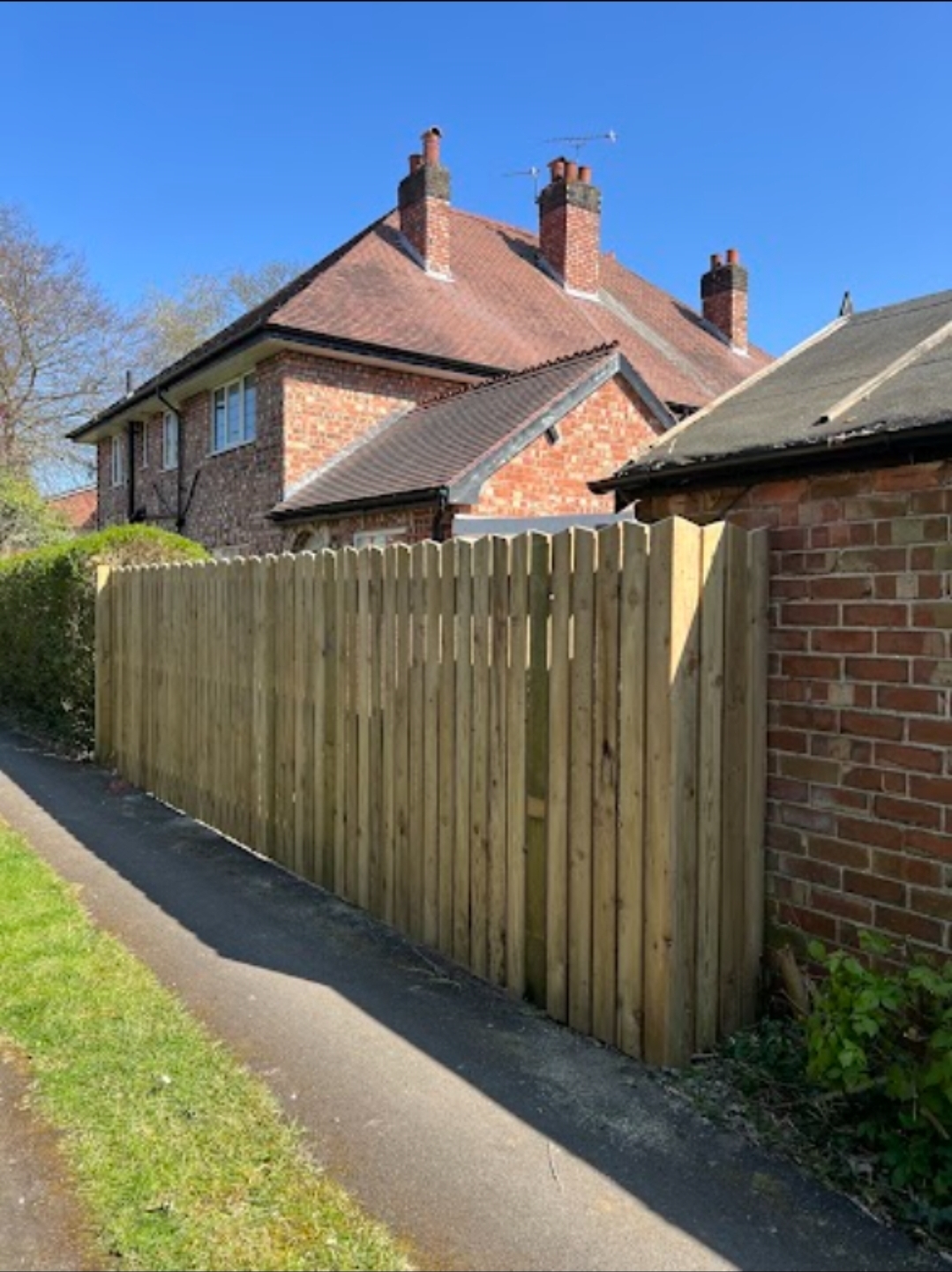
- Posts and rails are usually on the owner's side, with the smooth "good" side facing the neighbour. This is a courtesy convention, not a rule.
- Struts and supports normally face into the owner's garden.
- Who has maintained it over the years can also be evidence, especially if one household has always repaired it.
Do I have to put up or repair a fence?
In most cases, there's no general legal duty to have a fence at all, or to repair one. The main exceptions are where your deeds include a covenant requiring you to maintain a boundary, where livestock needs to be kept in, or where a fence is in such poor condition that it's dangerous. That said, a collapsing fence is rarely good for anyone, so most neighbours sort it out between them.
What about garden walls?
The Party Wall etc. Act 1996 applies to masonry walls that sit on the boundary line, called "party fence walls". It doesn't apply to timber or metal fences. If you're planning work on a shared garden wall, the Act may require you to give your neighbour formal notice first.
Replacing a fence: get it right first time
If the fence is yours, you can replace it, but a little courtesy goes a long way:
- Talk to your neighbour first. Explain what you're planning and when. Most disputes start because someone came home to find a fence gone.
- Build on your own land. Set the new fence along the boundary, not over it, and keep posts on your side.
- Agree access. Fitting a fence usually means working from both sides, so ask before stepping onto your neighbour's land.
- Check the height rules. Our guide on planning permission for fences covers the 2 metre and 1 metre limits.
If the boundary is shared, agree the style and the cost split in writing before work starts. A short message confirming who's paying for what can save a lot of awkwardness later.
What if we can't agree?
Most boundary disagreements can be settled with a calm conversation and a look at both sets of deeds. If that doesn't work, you can record a formal boundary agreement with HM Land Registry, or use a mediation service. Going to court over a fence is expensive and stressful, and is very much a last resort.
Need a new boundary fence?
At J&J Contractors, we install featheredge fencing, metal fencing and secure garden boundaries across Exeter, Tiverton, Paignton and South Devon. We're happy to talk through ownership and access with you and your neighbours before work starts. Every fence comes with our 10-year written guarantee, so you can be confident in the work. For a free, no-obligation quote, call 07476 554105, or read our guide to new fence costs first.
Planning a project?
Jay, Joshua and the team offer free on-site quotes across Exeter and the surrounding South Devon towns. Get in touch to discuss your fencing, landscaping, plastering or decorating project.
Testimonials & Feedback
What Our Customers Have to Say
Verified 5.0 Google rating from homeowners across Exeter & South Devon
Covering Exeter, Topsham, Tiverton, Sidmouth, Teignmouth, Dawlish, Newton Abbot, Torbay and rural Devon.
Tell us about your project
A lasting transformation backed by a 10-year guarantee.
From new boundary fencing and porcelain patios to driveways, plastering and decorating — get in touch with the team today for a free on-site consultation.