
What's the Best Fence for Windy, Coastal Gardens in Devon?
The best fence for windy, coastal gardens in Devon. Why panels blow down, why featheredge, slatted and metal fencing last longer, and how to set posts for strong winds.
19 October 2026 · 6 min read
If you live anywhere near the South Devon coast, you'll know the feeling. A big storm rolls in off the sea, and the next morning half the street is out looking at fence panels lying flat on the lawn. Gardens in places like Exmouth, Dawlish, Teignmouth and Brixham take a real battering from wind, rain and salt air. So what's the best fence for a windy, coastal garden, and how do you stop it blowing down?
Why fences blow down
A solid fence acts like a sail. When strong wind hits a flat, solid surface, all that force is transferred down to the posts and into the ground. Three weak points usually fail first:
- The posts. Timber posts rot at ground level, and once they're weakened, a strong gust snaps or levers them over.
- The panels. Standard lap panels slot loosely between posts and are relatively flimsy. In high winds, they can lift straight out or break apart.
- The fixings. In coastal areas, salt air corrodes ordinary steel nails, screws and brackets far faster than inland.
The best fence for a windy garden tackles all three.
Option 1: Featheredge (closeboard) fencing
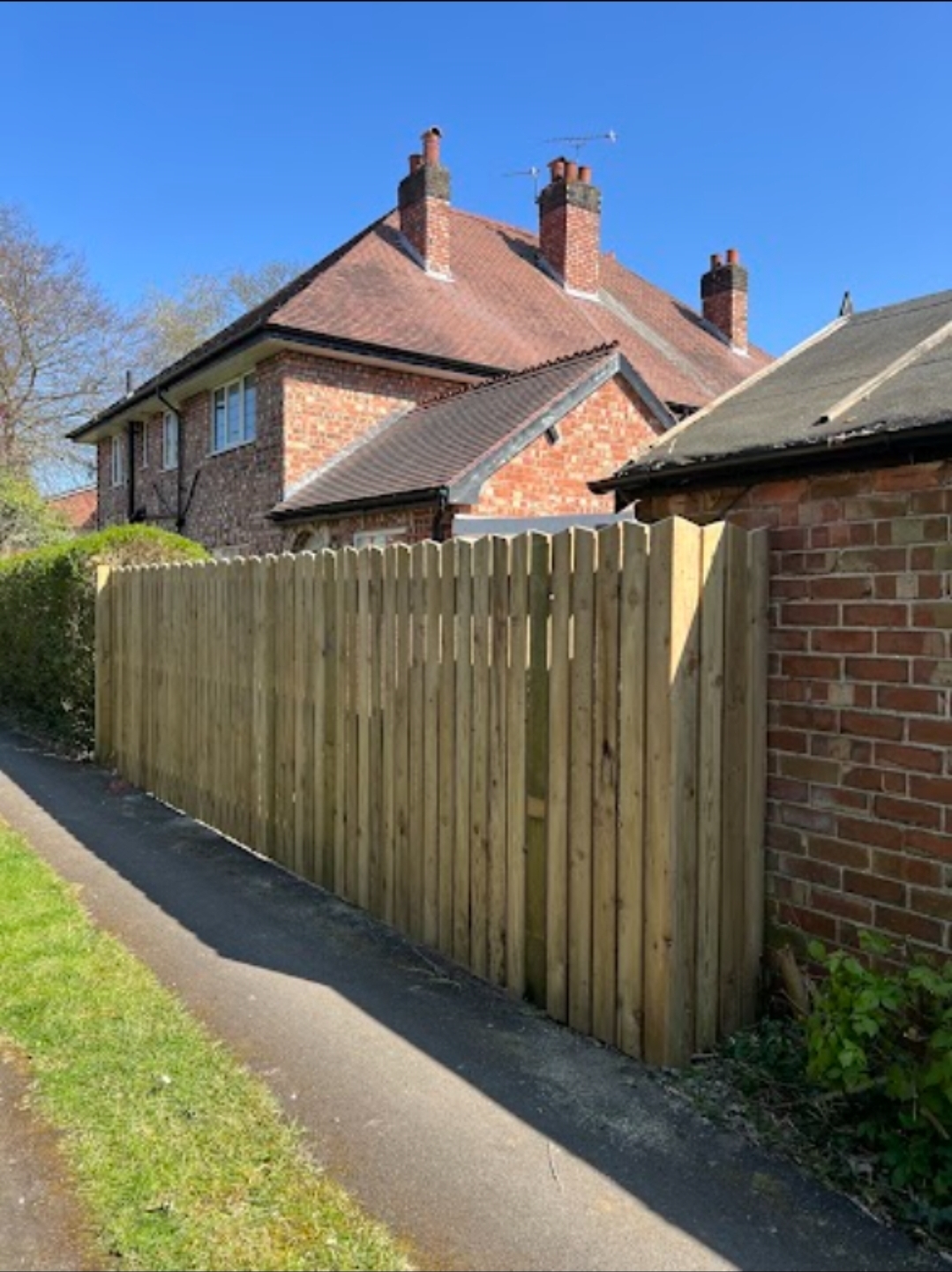
For most coastal homes, featheredge fencing is the best all-round choice. Instead of loose panels, it's built on site from overlapping vertical boards nailed to strong horizontal rails, which are fixed into the posts. That makes it far more rigid than a panel fence. If a board does get damaged, you can replace just that board rather than a whole panel.
Built with concrete posts and gravel boards, a featheredge fence gives you full privacy and stands up well to the kind of weather we get in South Devon. It's the fence we're asked for most in exposed spots.
Option 2: Slatted and hit-and-miss fencing
If your garden takes the full force of the wind, a fence that lets some air through can actually be stronger. Slatted fencing and hit-and-miss designs (boards fixed alternately on each side of the rail) allow wind to pass through the gaps. This reduces the load on the posts while still giving good privacy and shelter.
These designs also make better windbreaks. A solid fence creates turbulence on the sheltered side, while a partly open fence slows the wind more gently. That's better for your plants and for sitting out in the garden. Our custom fencing is ideal for this kind of design.
Option 3: Metal fencing
For front gardens and open boundaries, metal fencing and railings are naturally wind-resistant because air flows straight through them. In coastal areas, choose aluminium or galvanised steel with a powder-coated finish, as plain steel will rust quickly in salt air. Our metal fencing is specified with this in mind.
The posts matter most
Whatever style you choose, the posts are what keep a fence standing in a storm. For exposed gardens, we recommend:
- Concrete posts wherever possible. They won't rot and can last 25 years or more. Galvanised steel posts are another strong option.
- Deep foundations. As a rule of thumb, around a quarter of the post's length should be in the ground. That means at least 600mm for a standard 1.8m fence, and more on very exposed sites.
- Posts set in concrete, not just backfilled with soil.
- Closer post spacing on the most exposed runs, to share the wind load.
Small details that make a big difference in coastal gardens
- Use galvanised or stainless steel fixings. Ordinary nails and screws rust quickly in salt air, which weakens the whole fence.
- Choose pressure-treated timber. It lasts far longer than dip-treated timber in wet conditions.
- Fit gravel boards to keep timber off damp ground.
- Consider the height. Taller fences catch more wind. On very exposed plots, a slightly lower fence with a planted hedge behind it can work better. Remember the 2 metre planning limit too. Our guide on planning permission for fences explains the rules.
- Maintain it. A coat of treatment every few years and a quick check of posts after big storms will add years to your fence.
So which is best?
For most homes in Dawlish, Exmouth, Sidmouth and Torbay, a featheredge fence on concrete posts with galvanised fixings is the best balance of privacy, strength and value. On the most exposed plots, a slatted or hit-and-miss design reduces wind load even further. For front gardens, powder-coated metal railings are a stylish, low-maintenance option. The same salt air that attacks fences affects your walls too, so if your house needs a refresh, our painting and decorating team can help.
Get a fence built for the coast
At J&J Contractors, we build fences designed to cope with South Devon's coastal weather, from Brixham to Exmouth. Every fence is backed by our 10-year written guarantee. Call 07476 554105 for a free site visit and quote.
Planning a project?
Jay, Joshua and the team offer free on-site quotes across Exeter and the surrounding South Devon towns. Get in touch to discuss your fencing, landscaping, plastering or decorating project.
Testimonials & Feedback
What Our Customers Have to Say
Verified 5.0 Google rating from homeowners across Exeter & South Devon
Covering Exeter, Topsham, Tiverton, Sidmouth, Teignmouth, Dawlish, Newton Abbot, Torbay and rural Devon.
Tell us about your project
A lasting transformation backed by a 10-year guarantee.
From new boundary fencing and porcelain patios to driveways, plastering and decorating — get in touch with the team today for a free on-site consultation.